
Your First Sparring Session: A Beginner’s Guide To Surviving Without Panic-Flailing
Here's what to expect, how stay calm, and why panic is optional.

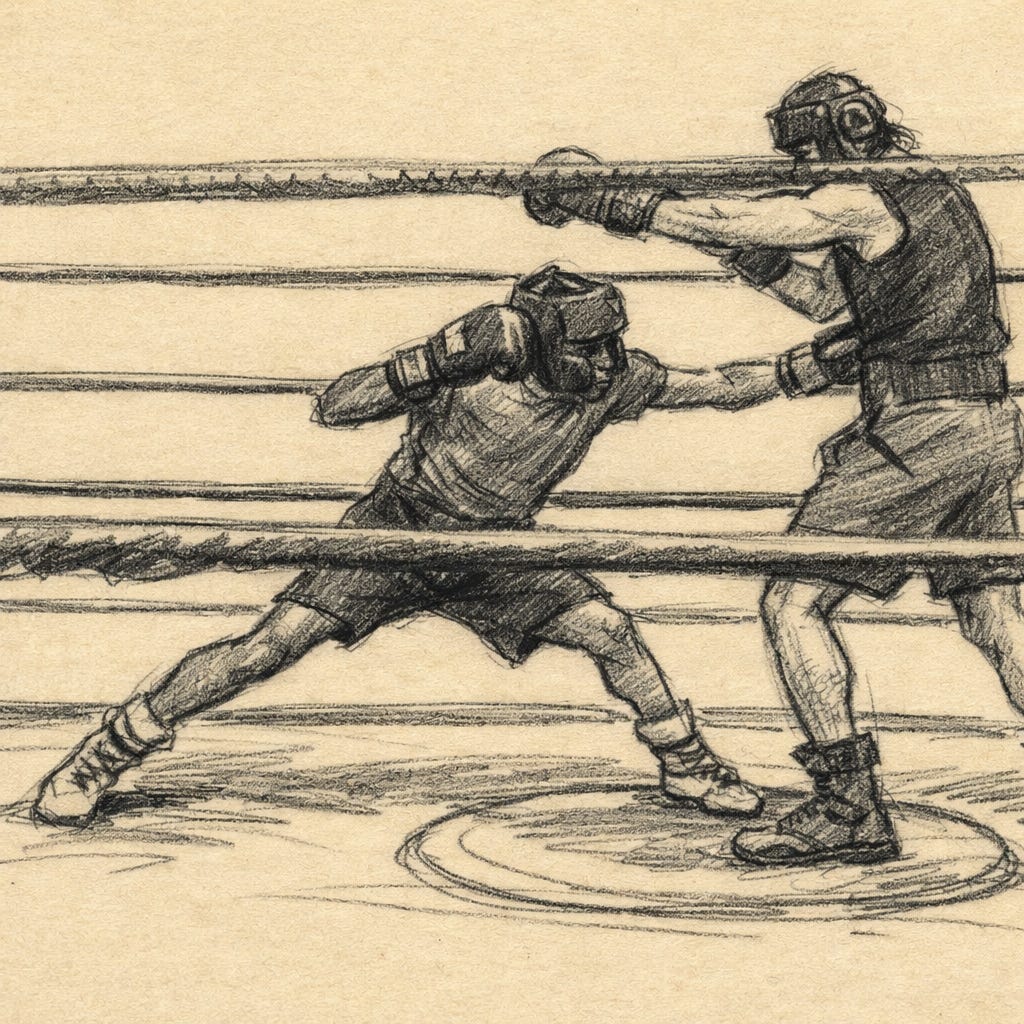
If you’re reading this, you’ve likely been training for a few months now, and you already have a good grasp of the basics. You’re now thinking about doing your very first sparring session.
Hold that thought.
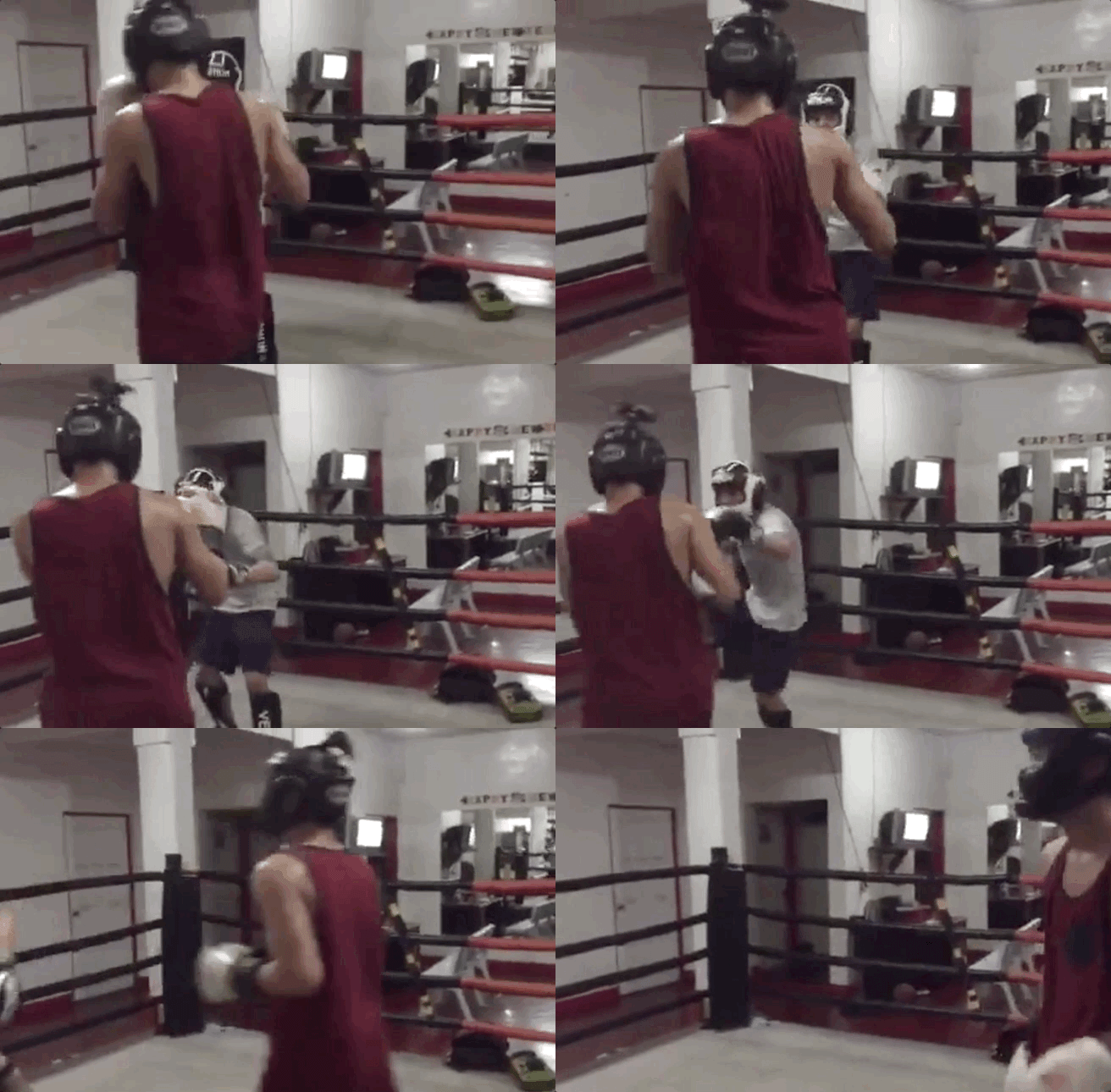
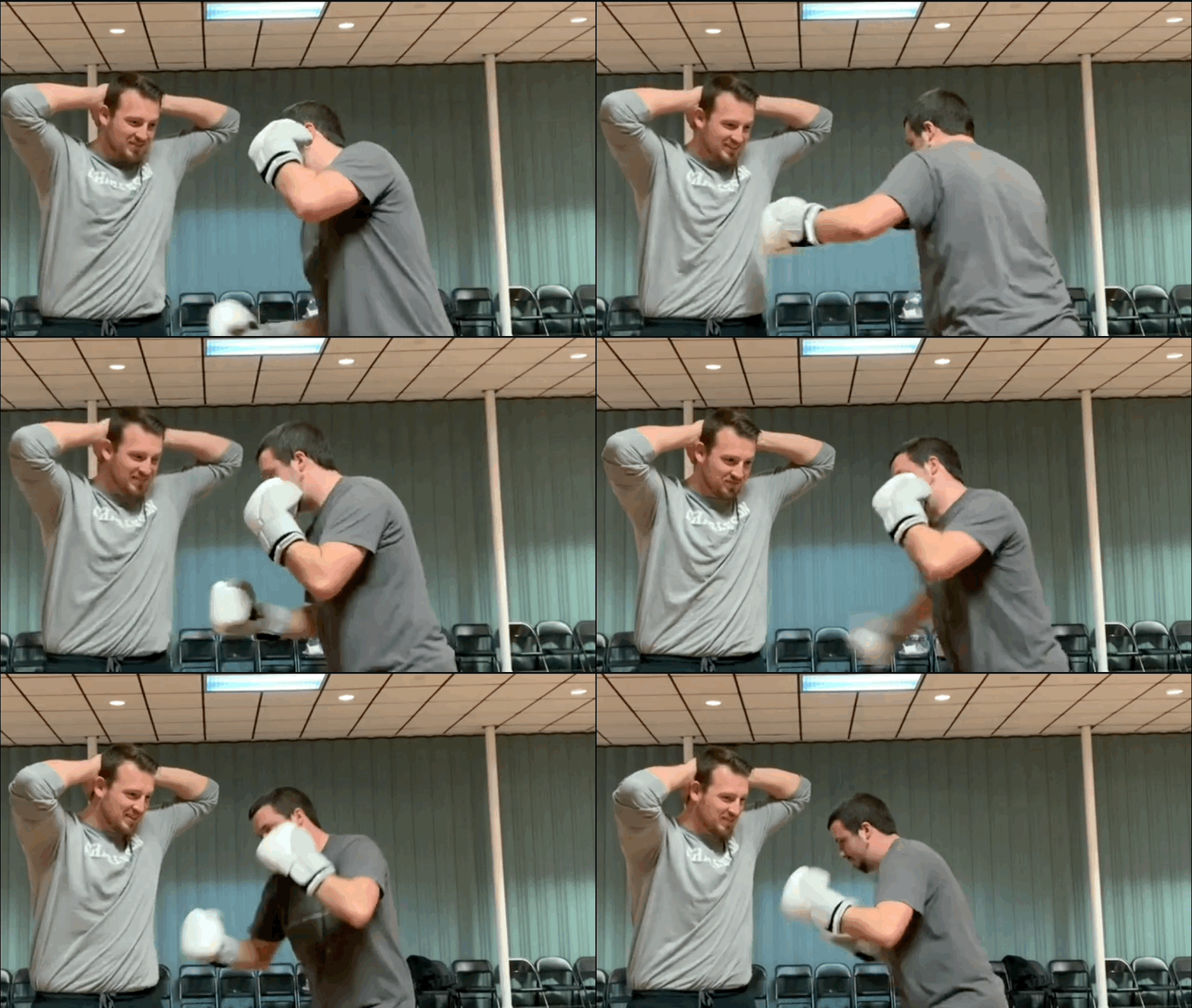
The doofus in the gray shirt, that’s me. Getting pieced up during a hard sparring session ahead of my amateur MMA debut in 2018.
Safe to say I left the gym that afternoon with a bruised ego and a dizzy spell. I’m pretty sure I had a mild concussion, too.
After reading my little story, you’re probably freaking out. If you are, please don’t.
For one, hard sparring is only a necessary evil for up-and-coming competitors who need to experience those requisite moments of adversity. It’s meant to get them battle-tested and not easily flustered once a right hook lands on their chin full clip.
But it doesn’t always have to be that way. Sparring can be a lot of fun, especially for beginners.
It’s alright to be a spaz.
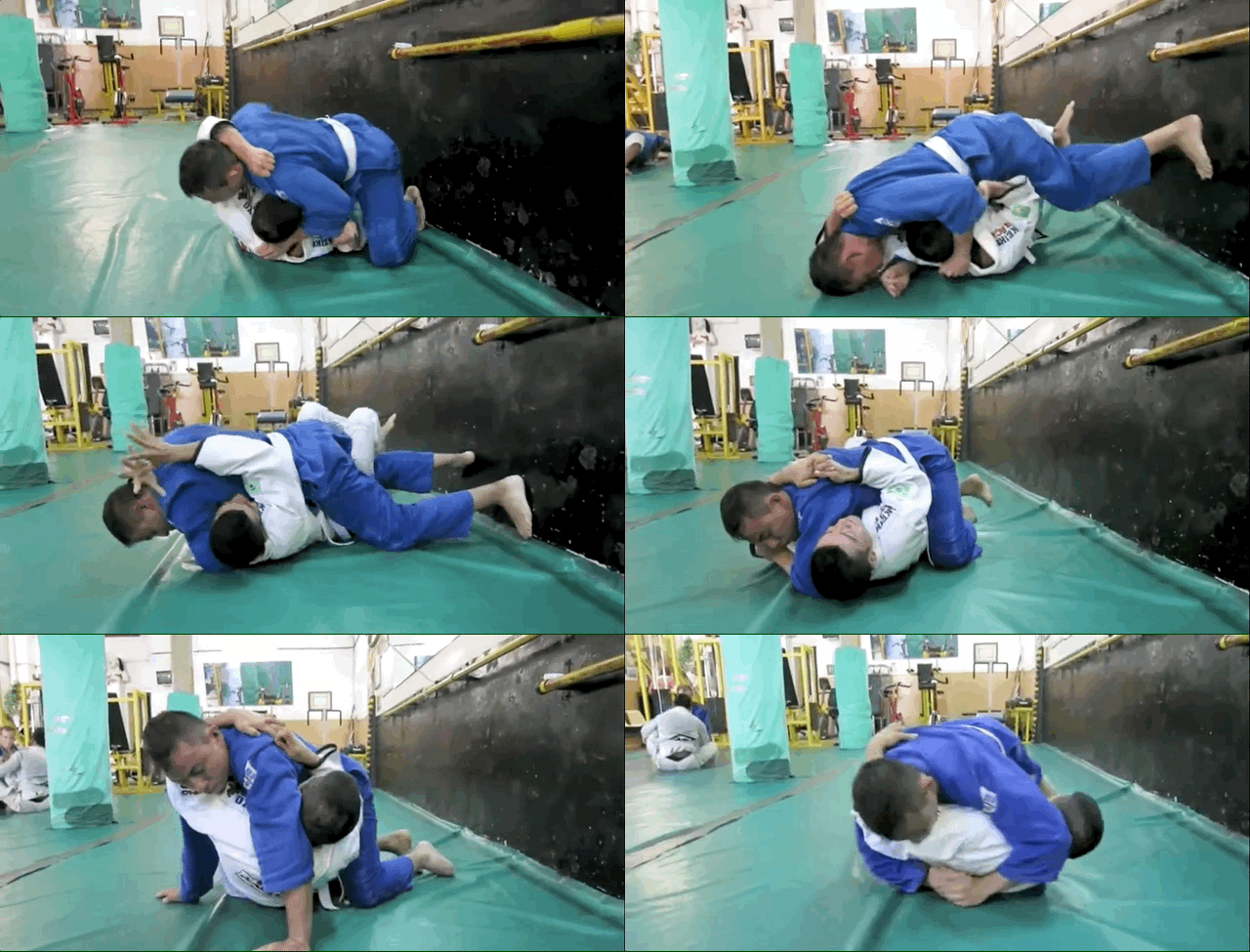
When you think of sparring, the first three thoughts are probably along the lines of getting hurt, hurting somebody, and overall doing badly. Well, that all depends.
Generally, beginners end up hurting each other in sparring because of their inexperience. In their heads, it’s all about winning more than it is about learning. And that’s okay.
I remember my early months as a white belt in Brazilian Jiu-Jitsu, accidentally elbowing a purple belt in the nose. All because of my spazziness.
As a response, he chose to choke me within the next 30 seconds until my eyes popped out.
Everyone starts as a white belt. At some point in their lives, the world champs in the gym were raw talents who served as target practice for the more experienced guys. We’ve all been there.
But once you begin to do it more often and develop spatial awareness and correct body position, that’s when things become more enjoyable.
If you’re still here, props to you. I’ll now share some of the sparring FAQs I get from beginners. These apply to both striking and submission grappling.
When should I start sparring?
In most Brazilian Jiu-Jitsu gyms, coaches will eventually allow you to spar around week 2 of consistent training. In boxing gyms, they’d give about a month or two, and rightly so, because it involves hitting one another.
But if you ask me, it’ll be wise to get a good grasp of the fundamentals first before getting in there.
For the striking arts, it’s maintaining your stance and learning proper defense, like keeping your chin covered with both hands.
For grappling, it’s knowing the correct way to fall and preventing yourself from getting flat on your back when fighting from the bottom position.
You will make A LOT of mistakes along the way, but that’s where firsthand learning comes into play.
What gloves should I use for sparring?
Let’s talk striking. The goal here is to minimize the chances for injury, so you’d want as much padding as possible. In this case, 14 or 16-ounce gloves work best.
These are on the heavier side, but they provide more cushion against broken noses and concussions in the practice room, because nobody wants that.
But here’s the caveat: In no way do those hand pillows give you the license to whale on each other like you were fighting for a world title.
Some people get a false sense of security behind bigger gloves and start whaling on their training partners.
Don’t be that person. Nobody wants to be the gym’s outcast.
How can I be a good sparring partner?
This is always a refreshing question to hear. Whether it’s from a regular, less-experienced student or someone who’d just begun their training, I always admire these people for their desire to do things correctly right off the jump.
In martial arts, they say, “you win, or you learn.” If you’re at the beginner level, it should strictly be about the latter.
The real victory in the gym doesn’t come from landing a clean shot or tapping your training partner out.
You know you’ve genuinely won if you can honestly tell yourself after every training session that you’ve learned something new.
A good sparring partner is someone who can give their peers that feeling of fulfillment from learning. They’re the ones you’d seek out from a crowd to do some rounds with because they give you that opportunity to try new things out.
If you’re that person, you’re doing it right.
How do I get better at sparring?
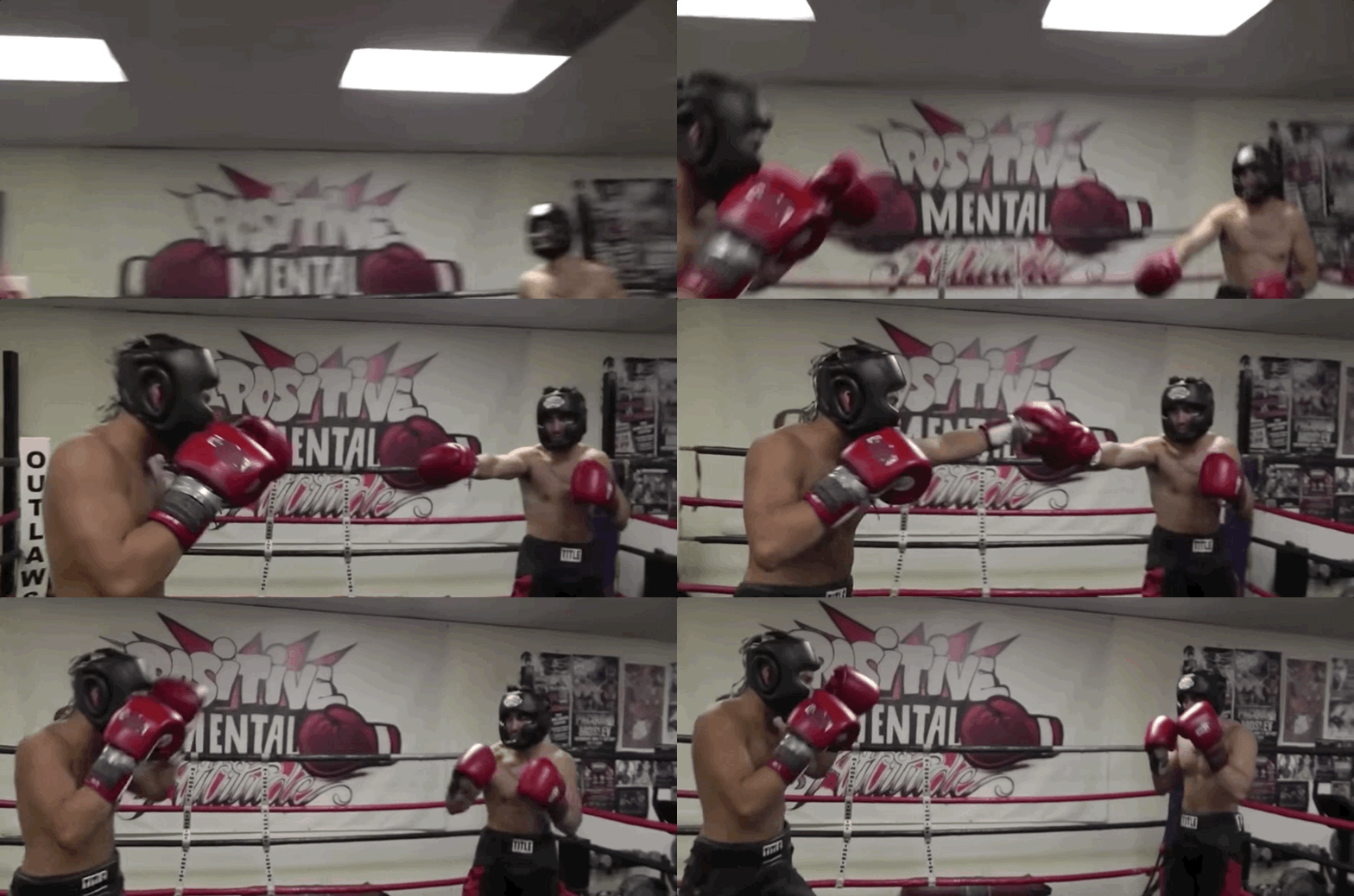
They say the devil is in the details. As coaches, we teach specific drills in class to help students absorb them much more easily.
It’s the same goal when you’re practicing the proper head position when shooting for a takedown, or getting yourself used to leading with the jab in boxing.
As beginners, one of the best ways to get good at sparring is to apply these techniques.
We do expect you to resort to it when sparring for the first time. That’s a given. But this will also allow you to see how these techniques work and, if needed, make the adjustments.
If today is left hook-cross-left leg kick day, try to incorporate that in your live drills. You’ll thank yourself later, I tell you.
Be a sponge
I was fortunate enough to have trained in some of the best gyms around the world. In 2016, I had the chance to attend one of John Danaher’s classes at the Renzo Gracie Academy in New York City.
For the uninformed, John Danaher is a modern-day oracle. The man is a walking encyclopedia of grappling techniques, dogmas, and philosophies.
I chanced upon one of his star-studded submission grappling sessions one Saturday afternoon.
The entire Danaher Death Squad was present: Garry Tonnon, Gordon Ryan, Eddie Cummings, and Georges St-Pierre, to name a few. It was one hell of a party.
I went back a year later, when a then-relatively-unknown Nicky Ryan turned me into a human ragdoll. Fun times.
I was already a blue belt at the time, with three years of experience. But I stepped onto those royal blue mats with a beginner's mindset. I thought to myself, ‘I paid $130 for this week, I have to make the most out of this.’
Now, of course, you can have other forms of motivation. But the point is, it pays to enter each sparring session as if it were your first day. Take in every bit of information you can get. ASK QUESTIONS.
And remember, anyone who’s had a significant enough amount of mat time will have something substantial to impart.
Belt ranks don’t matter. Learn from everybody.
Leave your ego at the door
You’ve likely heard this a thousand times over. Some gyms even have it written on their walls, in case you forget.
But I’m willing to bet the house that nine times out of ten, a sizable chunk of people don’t really take this to heart.
I’ve seen it happen countless times, mostly in boxing gyms. One guy enters the ring to spar, gets hit hard enough, and sees red.
But instead of taking it in stride and smiling it off, he unloads with haymakers of his own.
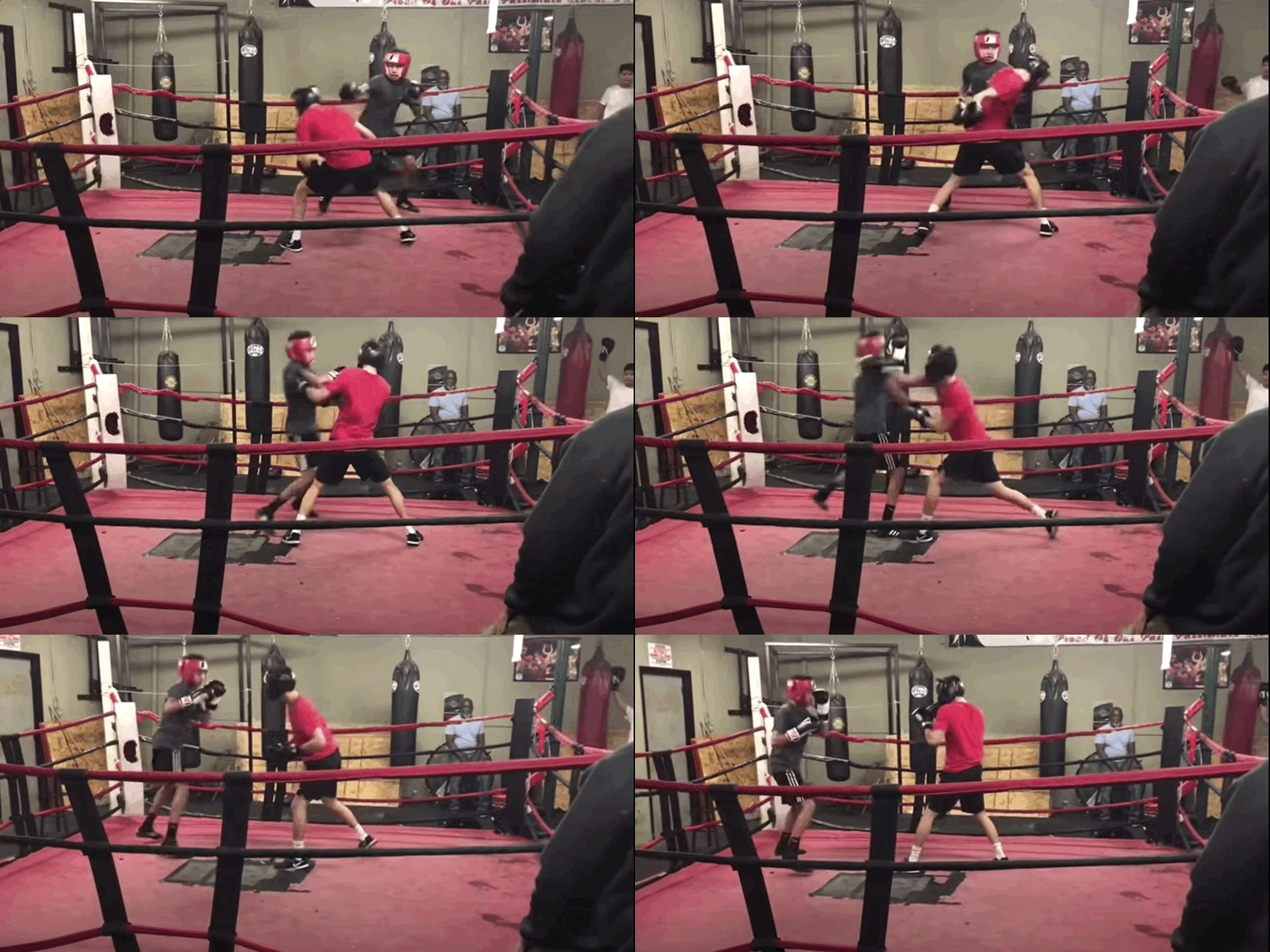
Next thing you know, you have two inexperienced guys trading concussions with each other.
What did they get out of it? Other than a dreadful headache for the next few hours, absolutely nothing.
Another quick story. As a beginner, I always felt anxious right before jiu-jitsu class. I had almost zero talent as a white belt, and I knew that I’d take a good beating every session.
This continued throughout my first four years of training. I’d have these apprehensions going into classes, knowing that I’d easily get my ass handed to me by lower-ranked guys.
I eventually decided to accept that tapping out is inevitable in training. It took a while, but I got there. And it was a game-changer.
I’ve seen black belts tap out to blue belts in our gym. It’s part of the never-ending learning process of this beautiful art.
I think it would be much better to say, “Leave your ego in your bedroom.” It has no place outside your home, let alone in society.
Save your YouTube techniques for yourself
Want a sure-fire way to tick off your instructor? Ditch the techniques they’re teaching and instead use that little trick you saw on YouTube last night.
No, we don’t need to see how Eddie Bravo demonstrated the Twister, or how ‘Wonderboy’ Thompson taught his spinning back kick.
These are well and good, but for a blank canvas like your beginner self, all of that’s useless.
Do yourself a favor and stick to the fundamentals. The ever-essential basics. You have to crawl before you walk and walk before you run or do backflips.
The fundamentals are the way to the light. These techniques will be your solid foundation for when you start learning the fancy-schmancy stuff.
Bonus: Beginner Sparring Drills To Try Out
I’m feeling extra generous today, so I thought I’d add in a few sparring drills for you to try out.
Now, I’ll assume you’ve been training for a while now, and you’ve gained enough skills to speak the same language.
Yes, martial arts is a language in itself. Sparring is a way of communicating. You replace words with specific moves, and you react to them with your counters.
And since you’re beginners, we’ll focus more on going slow and playing off specific situations. Here’s what I mean.
Combo for combo sparring
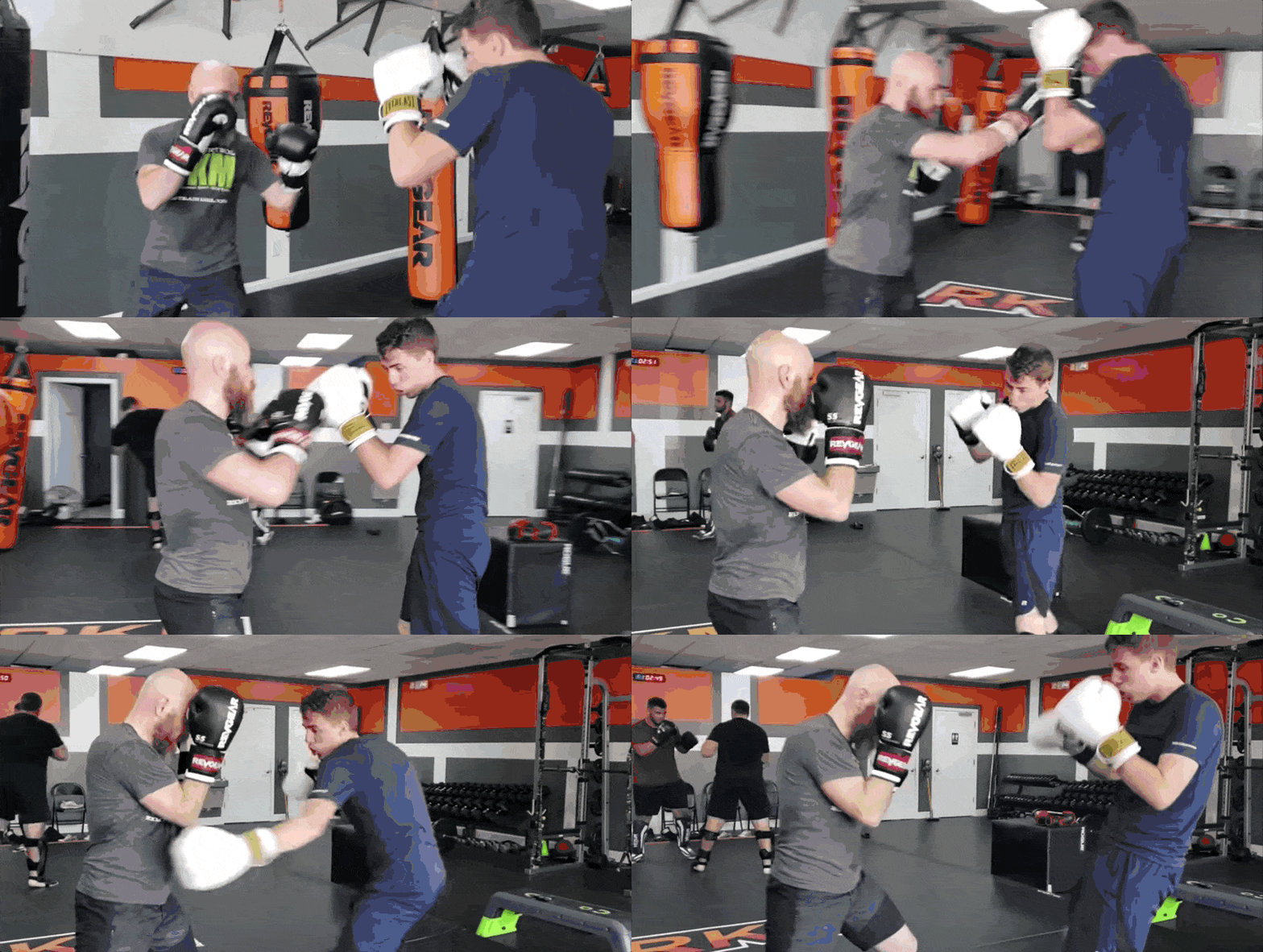
Tit-for-tat sparring for some folks. This drill is all about practicing the combinations your coach taught you. The heavy bag is an effective tool on its own, but that’s more for unleashing your power shots.
Combo for combo sparring makes you see what it’s like to land your combos on an actual human being. There’s less worry about getting bashed upside the head full clip because you’re both throwing at about 20 percent power.
This drill will sharpen your eye for spotting those precious openings and help you get used to the feeling of being hit. It’s also a fun and effective way to increase your fight IQ.
Slow rolling
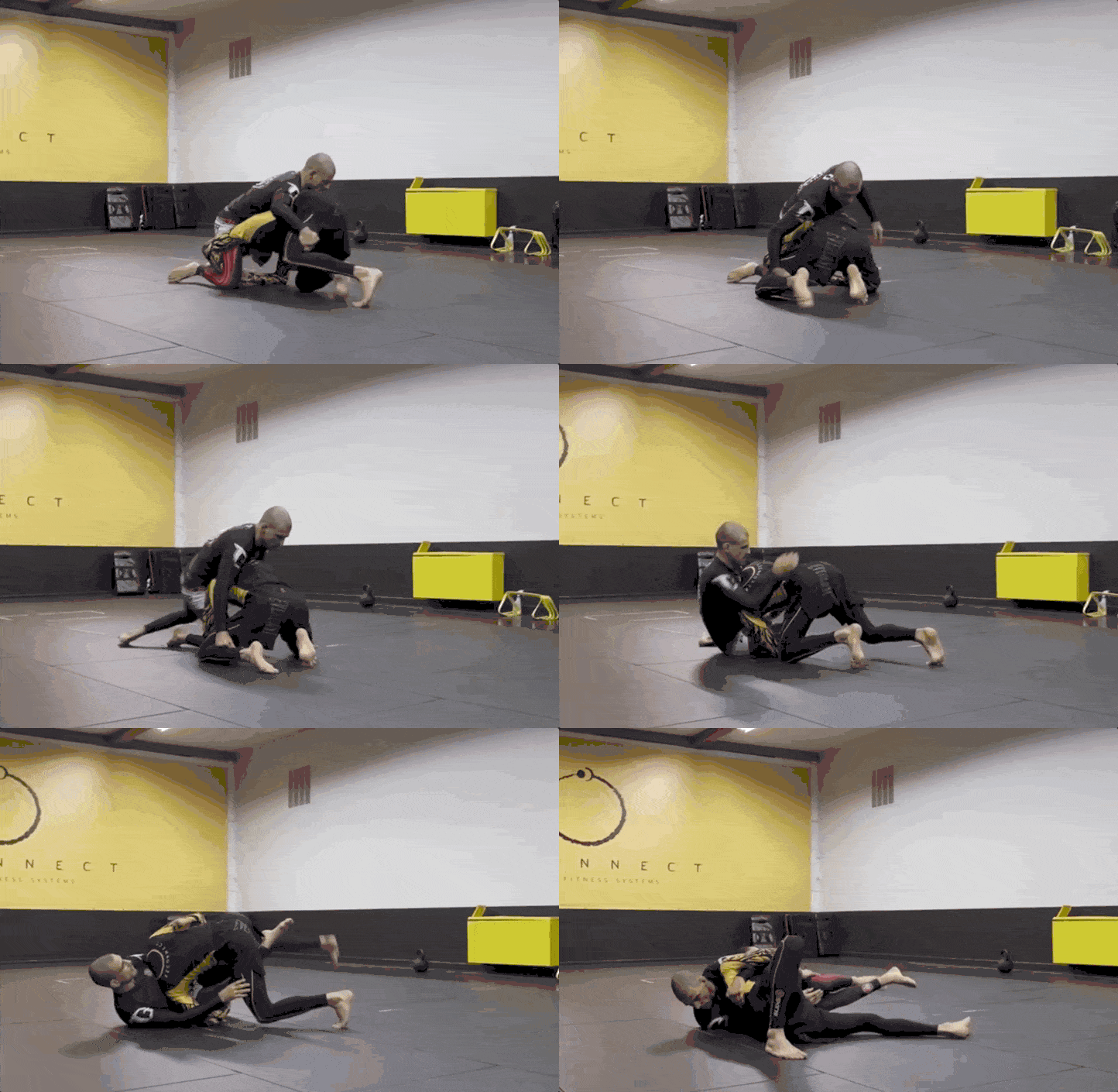
This is the grappling version of the tit-for-tat sparring. As beginners, you can’t expect to pick anything up in full-speed sparring. You’re getting your ass kicked, and that’s it.
Now, at this point, your techniques are pretty much shit. You don’t have the awareness or skill to mount any offense yet.
So how do you develop that? Again, by slowing things down.
Slow rolling helps you develop a deeper understanding of how the body moves during grappling. It’ll give you a better look at potential attacks at a given time while discovering counters to certain moves.
Think of it like watching a video and slowing it down to decipher what’s happening.
I’d always tell my students to get at least five rounds of slow rolling per week. It’s a refreshing change-up from all the chaos during live sparring.
Sprawling against takedowns
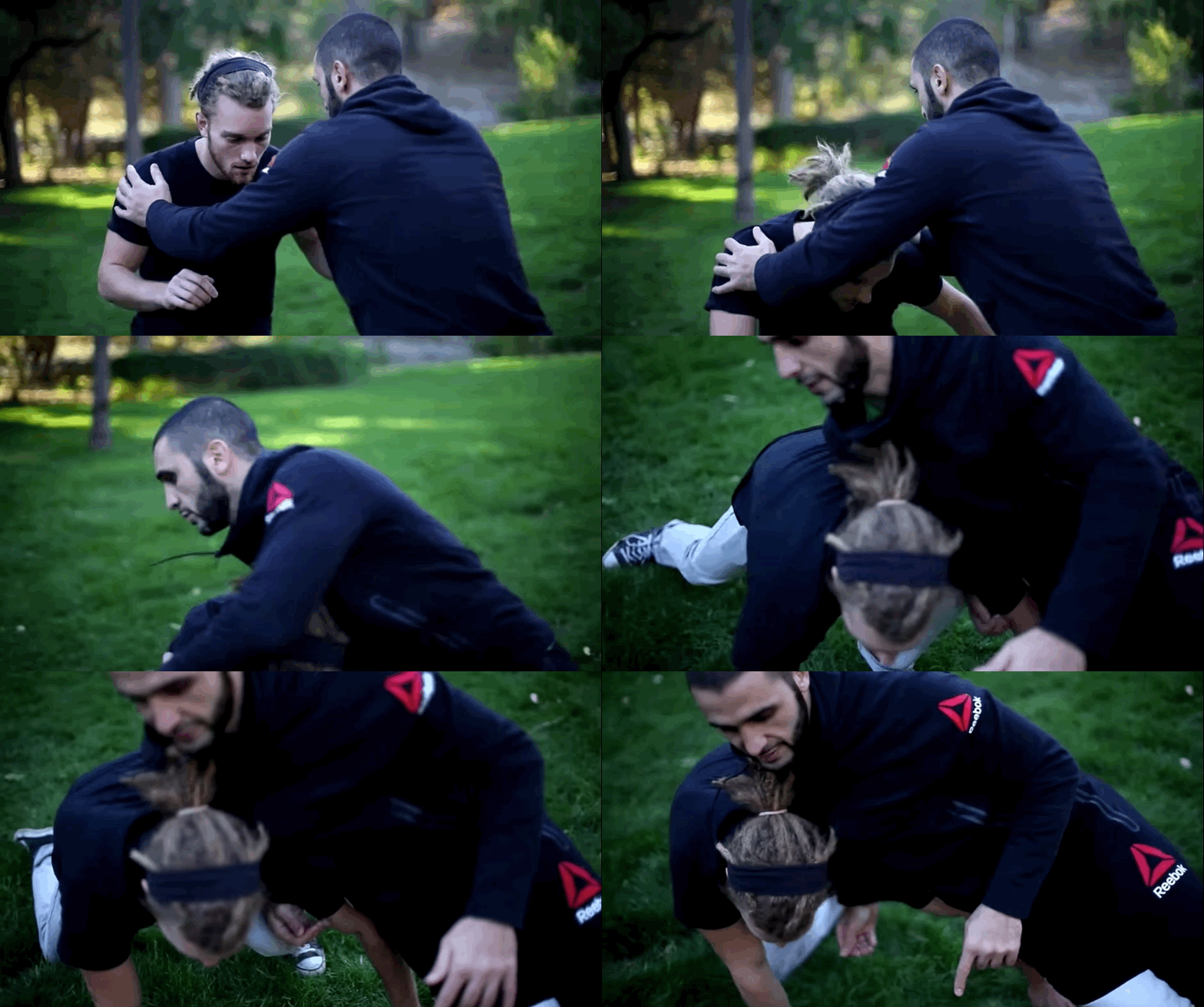
One of the first instructions you’ll hear from your coach during wrestling class is to sprawl. If a training partner takes you down, your response should be to drive your hips down to the mat to stuff their shot and render their takedown attempt futile.
Easier said than done. Thankfully, renowned MMA coach/champion breeder Firas Zahabi provided some pointers.
The drill starts with both the defender’s hands on the attacker’s shoulders. This is to measure distance and gauge the opponent’s body position.
Once you figure out the direction they’re headed, you’ll know which hip to drop.
In this case, the attacker is headed towards Firas’s right side. He responds by dropping his right hip to deflect the shot.
The attacker has now lost his leverage for the double-leg takedown and is even left in a more compromising position.
You can play around with this drill by having the defender get the back if he successfully stuffs the takedown. The attacker, meanwhile, should try to complete the takedown as much as possible.
Reset the action once either one of these goals is achieved.
The Ultimate Beginner Sparring Tip
I actually have three tips that connect to one general idea: Clear your mind. Take it easy. HAVE FUN.
The gym is that safe, controlled environment that allows you to be completely honest with yourself. It’ll give you a much-needed ego boost every time you achieve success, and it won’t judge you every time you fuck up.
Now go ahead and put yourself out there. Everything will be fine, I promise.
Cheers, and be well.
Fantastic article. I wish I had this article a few months ago.